The United Arab Emirates has emerged as a regional leader in healthcare innovation, with digital transformation reshaping how medical professionals diagnose and treat conditions across all specialties. Ear, nose, and throat disorders—ranging from chronic sinusitis to hearing loss—affect millions of residents and visitors each year, and the integration of electronic health records is fundamentally changing how these conditions are managed. For patients navigating the UAE’s complex healthcare landscape, understanding how technology improves continuity of care can lead to better outcomes and more efficient treatment pathways.
The Challenge of Fragmented Medical Records
Traditional paper-based medical records create significant obstacles for patients seeking specialized care. When someone visits multiple healthcare facilities for related conditions—perhaps seeing a general practitioner for recurring ear infections, then consulting a specialist for persistent symptoms—their medical history often remains trapped in separate filing systems. This fragmentation forces patients to repeat tests, recall medication histories from memory, and risk diagnostic delays while providers piece together incomplete information.
The problem intensifies for ENT conditions, which frequently require coordination between multiple specialists. A patient with chronic rhinosinusitis might need input from an allergist, an immunologist, and a surgeon. Without unified records, each provider works with partial information, potentially missing drug interactions, previous treatment failures, or underlying conditions that influence treatment decisions. The UAE’s diverse population compounds this challenge, as many residents maintain relationships with healthcare providers in their home countries while seeking treatment locally.
Blockchain Security Meets Clinical Practice
Modern digital health systems address these gaps through secure, interoperable platforms that give authorized providers instant access to comprehensive patient histories. Recent advances in data security have made it possible to share sensitive medical information across institutions without compromising privacy. Technologies like blockchain-based health record systems create tamper-proof audit trails, ensuring that patient data remains both accessible to treating physicians and protected from unauthorized access.
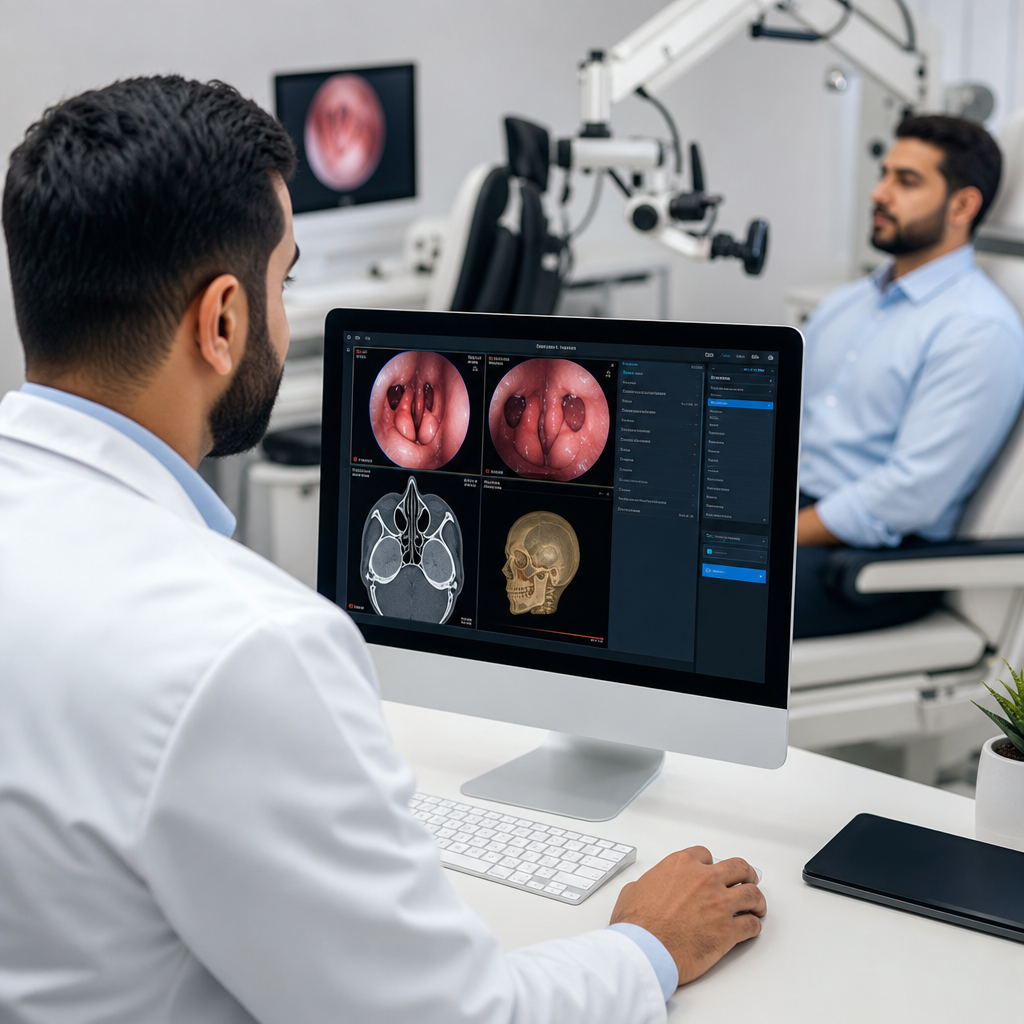
For ENT patients specifically, this technological infrastructure means that imaging studies, hearing test results, and surgical reports follow them between appointments. A CT scan of the sinuses performed at one facility becomes immediately available when the patient seeks a second opinion or requires emergency care at another hospital. Allergy test results, medication histories, and previous surgical interventions are no longer lost in translation, reducing redundant procedures and enabling more informed clinical decisions.
Practical Benefits for Common ENT Conditions
Consider a patient experiencing progressive hearing loss. With integrated records, an audiologist’s initial assessment, including pure-tone audiometry results and speech discrimination scores, automatically populates the specialist’s system before the consultation. The physician can review trends over time, identify whether hearing loss is conductive or sensorineural, and determine appropriate interventions without asking the patient to track down printed reports from previous appointments.
Similarly, chronic conditions like tinnitus or vertigo benefit enormously from longitudinal data tracking. These disorders often require trial-and-error approaches to treatment, with medications adjusted based on symptom patterns over weeks or months. Digital systems allow providers to chart symptom severity, medication responses, and quality-of-life measures in structured formats that reveal patterns invisible in narrative notes. When treatment plans need adjustment, physicians can review what has already been attempted and at what dosages, avoiding the frustration of repeating ineffective interventions.
Accessing Specialized ENT Services in Abu Dhabi
The capital’s healthcare infrastructure has expanded significantly to meet growing demand for specialized medical services. Major hospitals now offer comprehensive diagnostics and treatment for conditions affecting the ears, nose, throat, and related structures of the head and neck. Patients dealing with chronic sinusitis, sleep apnea, voice disorders, or balance problems can access advanced care through multi-specialty centers that integrate otolaryngology with other relevant disciplines. For residents seeking subspecialty expertise, consulting an ear nose and throat doctor at a facility with robust digital infrastructure ensures that all relevant medical information—from previous imaging studies to medication trials—informs the treatment approach from the first appointment.
The Role of Telemedicine and Remote Monitoring
Digital health records have enabled new models of care delivery that extend beyond traditional clinic visits. Post-operative follow-up for procedures like tonsillectomy or septoplasty increasingly incorporates remote check-ins, where patients upload photos of healing surgical sites or report symptom scores through secure portals. Physicians can review this information between scheduled appointments, intervening early if complications arise rather than waiting for symptoms to escalate.
For pediatric ENT cases, this approach proves particularly valuable. Parents can document their child’s breathing patterns during sleep using smartphone video, which the specialist reviews alongside oxygen saturation data from home monitoring devices. This objective information supplements clinical examination, helping determine whether adenoid enlargement or tonsillar hypertrophy warrants surgical intervention or can be managed conservatively.
Navigating the UAE Healthcare System
International patients and UAE residents benefit from understanding how the country’s healthcare landscape operates before seeking specialized care. Hospital networks across the Emirates vary in their digital capabilities, insurance affiliations, and specialist availability, making informed selection important for optimal outcomes. Insurance coverage often dictates which facilities patients can access, though many hospitals accommodate both insured and self-pay patients seeking specialized services.
For expatriates managing chronic ENT conditions, establishing care with a provider who participates in digital health networks proves especially important. When employment changes or insurance plans shift, comprehensive electronic records enable seamless care transitions. The alternative—rebuilding medical histories from scratch with each provider change—wastes time and money while potentially compromising treatment continuity.
Looking Ahead: Artificial Intelligence and Diagnostic Support
The next frontier in digital ENT care involves machine learning algorithms that analyze patterns across large datasets to support clinical decision-making. Early implementations focus on image analysis, where AI systems trained on thousands of endoscopic images help identify subtle abnormalities in the nasal passages or larynx that might escape initial visual inspection. These tools do not replace physician expertise but serve as a second set of eyes, potentially catching early-stage pathology when treatment proves most effective.
Predictive analytics represent another emerging application. By analyzing historical data from thousands of patients with similar presentations, algorithms can estimate which individuals face elevated risk for complications after sinus surgery or which medication protocols achieve the highest success rates for specific types of chronic rhinitis. Such insights help physicians personalize treatment plans based on evidence from comparable cases rather than relying solely on general clinical guidelines.
Patient Responsibilities in the Digital Age
While healthcare providers drive digital transformation, patients play an essential role in maximizing its benefits. Actively requesting access to personal health portals, reviewing records for accuracy, and updating medication lists after each appointment ensures that digital systems contain current information. When seeking care at new facilities, patients should inquire whether the provider can access existing records through health information exchanges rather than starting from zero.
Understanding consent processes for data sharing also matters. Most systems require explicit patient permission before transmitting records between unaffiliated institutions. Granting these permissions in advance—rather than during urgent situations—facilitates smoother care coordination. For ENT conditions that may require emergency intervention, such as severe allergic reactions or acute airway obstruction, having critical information immediately available can prove lifesaving.
The convergence of digital health infrastructure and specialized medical care represents a fundamental shift in how patients experience healthcare in the UAE. For those managing ear, nose, and throat conditions, these technological advances translate into fewer redundant tests, more coordinated care teams, and treatment decisions informed by complete medical histories. As the healthcare system continues evolving, patients who engage actively with digital tools while seeking providers committed to interoperable systems will find themselves best positioned to benefit from both cutting-edge technology and clinical expertise.